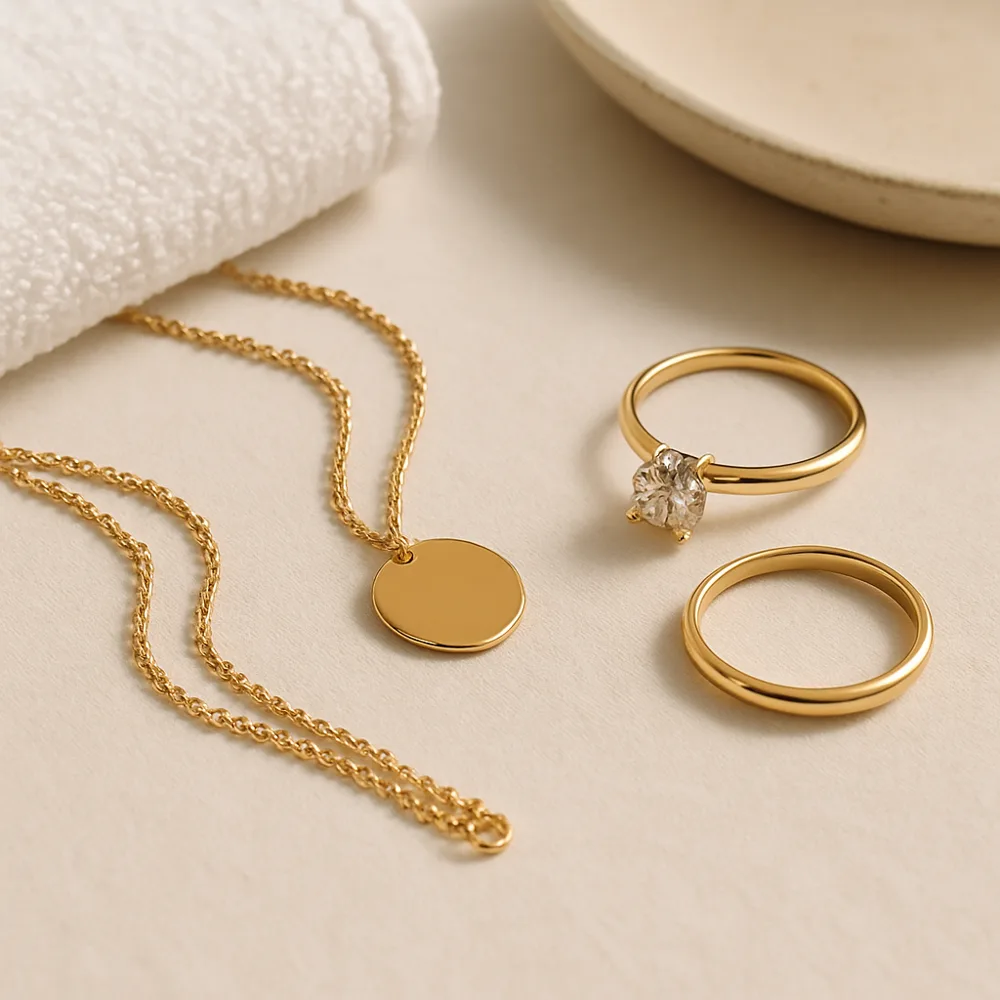
Gold karat indicates the proportion of gold in an alloy. Higher-karat gold contains a greater share of pure gold, while lower-karat gold includes more other metals. Those additional metals influence color, strength, and how a piece responds to wear. The karat mark is useful information, but it does not by itself tell you whether a design suits your routine.
Gold alloys can appear in yellow, white, or rose tones depending on their composition and finish. People with metal sensitivities should check a piece's specific alloy details rather than assuming a color reveals every ingredient. White gold may have a surface coating that changes with wear, and different makers may use different alloy recipes. Ask for material information when sensitivity or maintenance is a concern.
Think about construction as well as karat when choosing a ring or necklace. A fine chain, a setting with delicate prongs, or a thin band may need more careful handling than a sturdier design, whatever the gold content. Remove jewelry for tasks likely to cause impact, abrasion, or chemical exposure. A jeweler can explain how the specific alloy and construction affect cleaning, repair, and long-term care.